I'm Andrew Goldberg, a Boston real estate advisor specializing in first-time buyers across Greater Boston. I guide you A to Z—from first search to closing day. Serving Boston, Somerville, Cambridge, Brookline, Medford and Newton, MA.
Key Takeaways
•The short answer: Bay Village is one of Boston's smallest neighborhoods. It is a quiet pocket of 19th-century brick rowhouses near the Public Garden, with 804 households according to U.S. Census Bureau figures.
•The real draw: History limits the supply of rowhouse homes. The core is a protected historic district, so new buildings rarely appear inside it.
•The catch: You pay for location rather than space, and DoorProfit's crime index runs above its Boston average.
•The bottom line: Buy here for a long stay and a walking lifestyle, not for a quick gain. Always get an inspection.
At a glance
Boston Market Snapshot by Property Type — August 2026
12.7 months
Repliers / MLSPIN
Bay Village Housing Units by Structure Size
28.8%
Bay Village, Boston, MA Demographics: Population, ...
How Bay Village Residents Commute to Work
53%
THEBOSTONECONOMY; Bay Village, Boston, MA Demographics: Population, ...
Bay Village Crime Indices: Overall, Violent, and Property Crime
162
DoorProfit
What Is Bay Village Boston, and Why Does It Barely Change?
If you've searched "Bay Village Boston," you're probably asking a bigger question: is it worth buying here?
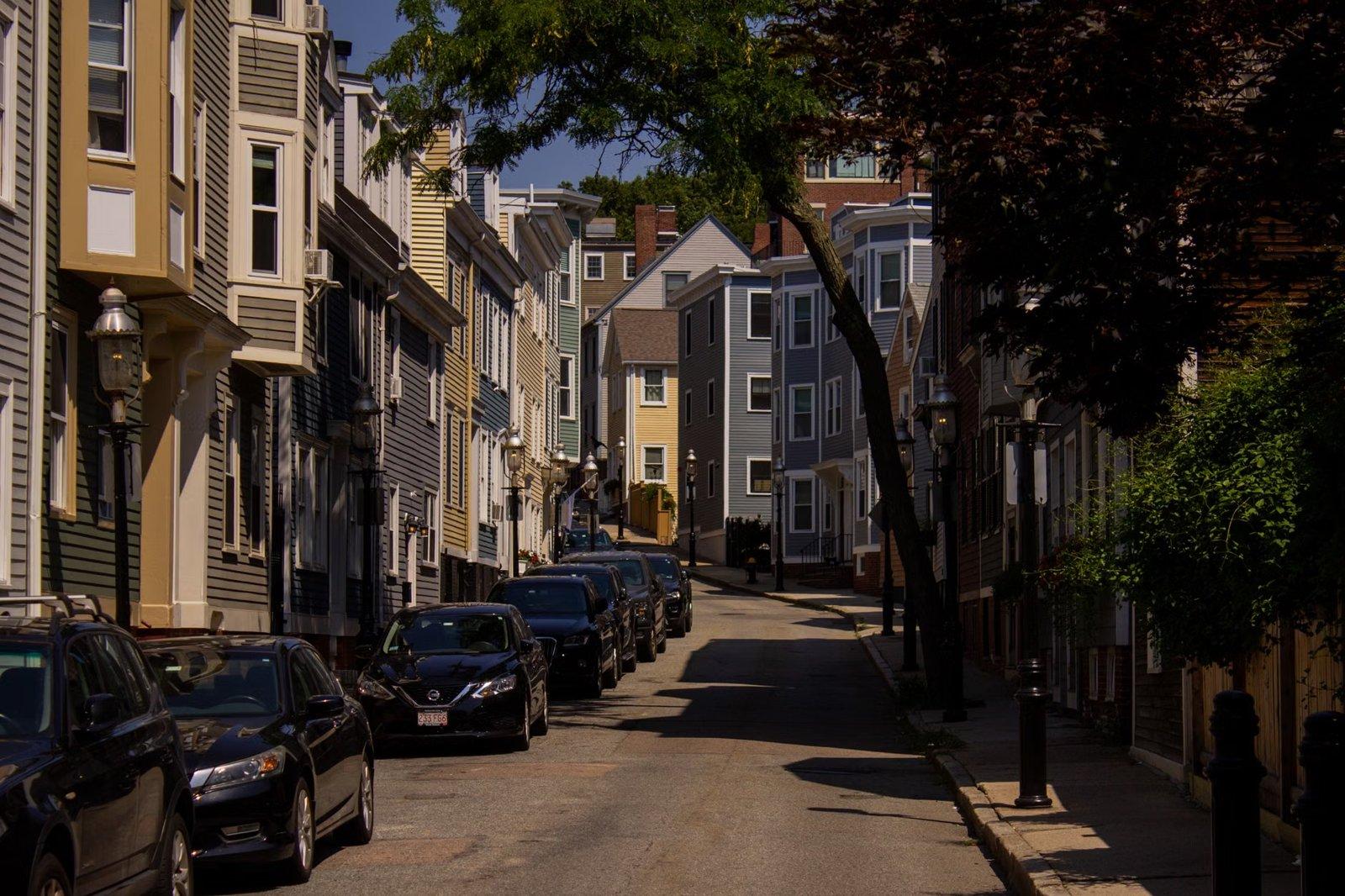
The neighborhood covers a few quiet blocks of brick rowhouses tucked between Back Bay, the South End, Park Square, and the Theater District, about two blocks south of the Public Garden. The U.S. Census Bureau counts 804 households and 1,284 residents, figures that get republished across local neighborhood pages.
This isn't a growth story. It's a small, settled enclave whose streets and building pattern were locked in during the 1800s and never really moved since.
The scarcity here is real, and it comes from history, narrow old streets, and preservation rules — not marketing copy. But that scarcity is mostly a lifestyle argument. It explains why the place feels unusual and why sellers can ask high prices. It doesn't guarantee those prices will climb.
Who Lives in Bay Village, and Why Do They Stay?
Census figures put the median age at 46. Average individual income runs $124,546, and households average just 2 people. That profile points to settled couples, long-term owners, and people who value location over square footage.
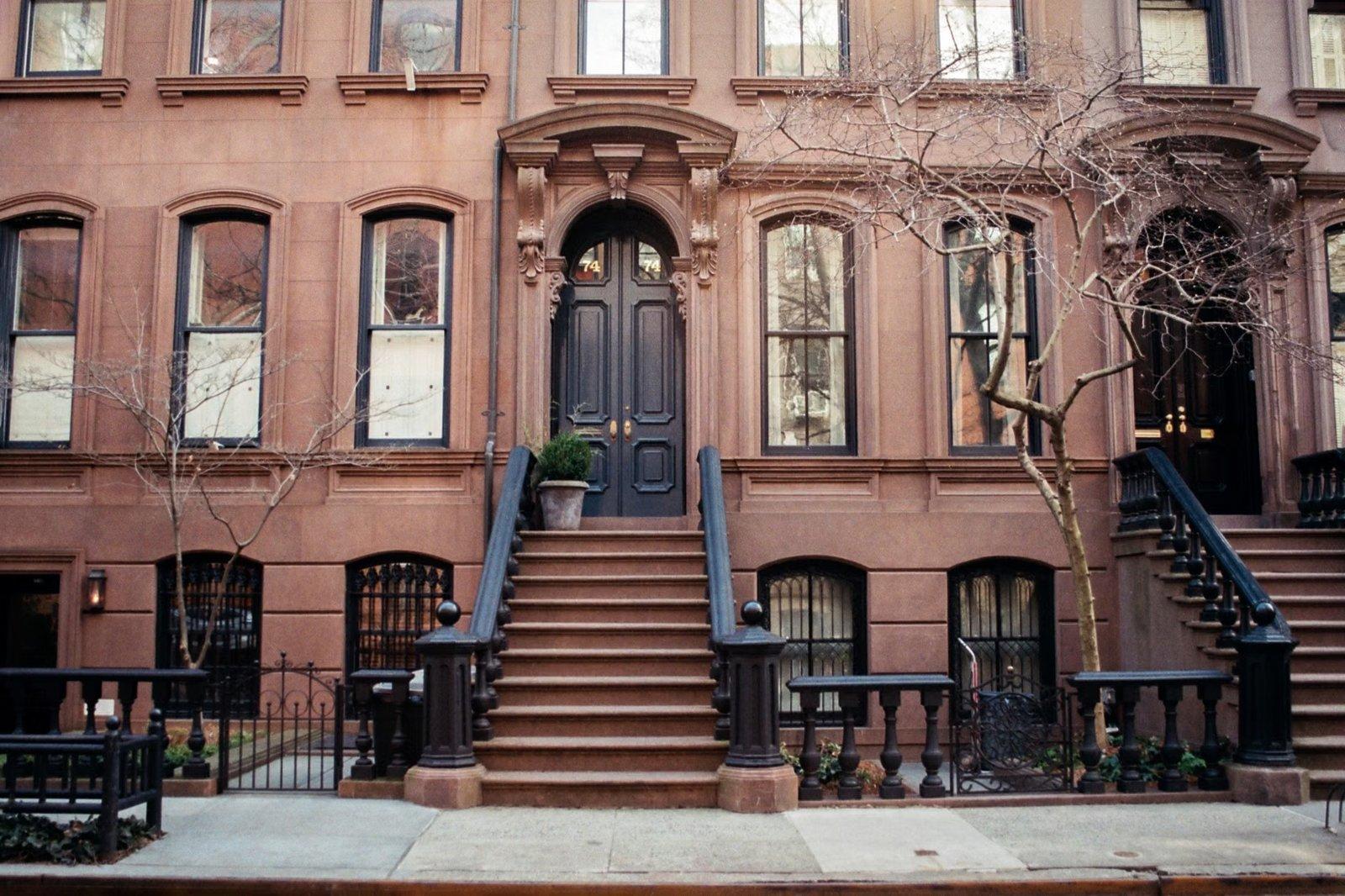
The curb appeal has deep roots — the neighborhood sits on filled land, and many homes look like smaller cousins of the Beacon Hill rowhouses nearby.
Then there's the lifestyle. Walk Score rates Bay Village 99 for walking and 100 for transit. Arlington, Boylston, Tufts Medical Center, and Back Bay stations are all close by, and residents actually use that access: 53% of Bay Village workers walk to their jobs.
How Bay Village Residents Commute to Work
Walking is the dominant commute mode in Bay Village, used by 53% of workers compared with 33% who commute by car.
Walking is the dominant commute mode in Bay Village, used by 53% of workers compared with 33% who commute by car.
Series
Label
Value
Commute Mode Share
Car
33%
Commute Mode Share
Taxicab
1.5%
Commute Mode Share
Bus or trolleybus
3.2%
Commute Mode Share
Railroad
3.1%
Commute Mode Share
Ferryboat
0.4%
Commute Mode Share
Bicycle
5.8%
Commute Mode Share
Walk
53%
Source:THEBOSTONECONOMY; Bay Village, Boston, MA Demographics: Population, ...
That translates to fewer car costs, easier commutes, and quick access to restaurants, offices, parks, and trains. That everyday convenience is really what your premium buys.
One honest note for families: with households averaging just 2 people, this isn't a typical family neighborhood. If schools matter to your decision, look into how Boston Public Schools assignment works before you fall for a front door.
Are New Towers Going Up Near Bay Village?
Yes, but mostly at the edges. Newer high-rises line Stuart Street and Charles Street South. Census survey data shows buildings with 50 or more units make up the largest share of local housing, at 28.8%.
Bay Village Housing Units by Structure Size
Bay Village’s housing stock is dominated by multifamily buildings, with 50-or-more-unit structures accounting for the largest share at 28.8% of housing units.
Bay Village’s housing stock is dominated by multifamily buildings, with 50-or-more-unit structures accounting for the largest share at 28.8% of housing units.
Only about 5.5% of homes are single-unit houses (1.6% detached, 3.9% attached). Buildings with 3 to 9 units make up 41.1% (18.4% with 3–4 units, 22.7% with 5–9). In practice, most buyers here are buying a condo, not a whole rowhouse.
These towers don't erode the scarcity of the historic core — they add elevators and city views, not brick rowhouses on protected side streets. A buyer who wants a 19th-century front door on a quiet lane won't find it in a new tower. Where a rowhouse has been divided into condos, the unit count changes, but the building and street look exactly the same.
Wikipedia lists Bay Village as a Boston Landmark district. Buy on Fayette, Melrose, Cortes, or Isabella Streets, and don't assume you can add a floor or reshape the façade. Confirm the current exterior-change rules with your agent or the Boston Landmarks Commission before you buy.
The trade-off cuts both ways: you give up the chance to add value through major renovations, but in return you get a streetscape your neighbors can't touch either. If your plan depends on adding space, look elsewhere.
What Does Bay Village Real Estate Cost Right Now?
Here, you're paying for location, history, and walkability more than raw space. Want a large home? Your money goes further in another Boston neighborhood. Want a near-perfect Walk Score on a historic block? The higher price per square foot is simply the cost of admission.
Remember, assessed value and market value aren't the same thing. Assessed value is what the city uses for property tax; market value is what a buyer will actually pay. When you make an offer, lean on recent comparable sales, not the tax record.
City-wide, buyers have more leverage than in hotter markets. Repliers / MLSPIN data covering Boston single-family, condo, and mixed property types shows Boston condos carried 12.7 months of supply, a 48-day median time on market, and a $785,000 median sold price in August 2026.
Months of supply measures how long it would take to sell every listed condo at the current pace — 12.7 months is slow, which supports patient negotiation. But since it's a city-wide figure, it may overstate how many choices you'll actually have in a neighborhood this small. Condos are also taking longer to sell than single-family homes across Boston, which gives condo buyers more room to negotiate.
Boston Market Snapshot by Property Type — August 2026
Boston condos show the softest buyer conditions among the listed segments, with 12.7 months of supply and 48 median days on market versus 6.6 months and 37 days for single-family homes.
•Inspections: Since October 15, 2025, Massachusetts regulation 760 CMR 74.00 says a buyer's inspection right can't be waived, according to the Massachusetts Real Estate Law Blog. As-is sales — where the seller won't make repairs — are still allowed. Inspector Lenny Licari told WCVB he's inspected over 24,000 homes and named water infiltration the most common deal-breaker. In 19th-century brick, that's exactly where to focus.
•If you rent here first: Since Aug. 1, 2025, whoever hires the broker pays the fee, so tenants usually don't cover a landlord's agent, according to NBC Boston.
•Out-of-state sellers: Since November 1, 2025, some sales of $1,000,000 or more have 4% of the price held back at closing for state taxes. This applies to sellers who don't live in Massachusetts and don't qualify for an exemption, according to Hinckley Allen.
For your wallet, the inspection rule matters most. Water, roof, and masonry problems in old brick get expensive fast.
What Are the Strongest Arguments Against Bay Village?
"A flat population and slow sales could mean weak demand, not scarcity value."
This is the strongest objection, and the data partly backs it up. The slow city-wide condo supply and time on market above signal soft demand, not a bidding war. The counterargument is location: Bay Village offers historic rowhouse blocks and near-perfect walkability that few areas priced around the $785,000 city-wide condo median can match. But that's a lifestyle premium, not proven appreciation. Buy here because you want to live here for years, not because scarcity alone will raise your home's value.
"The demographic figures don't agree across sources, so can the profile be trusted?"
Some data pages list Bay Village at 663,972 residents — that figure actually matches all of Boston, not a few-block enclave. The Census count of 804 households and 1,284 residents fits the neighborhood's actual size. Still, income and age figures from small-area surveys carry wide error margins, so treat the profile as a rough guide rather than gospel.
"The 4% withholding doesn't apply to most owners."
True. Massachusetts residents are exempt, according to Hinckley Allen, and out-of-state sellers may also qualify — confirm with your closing attorney. The rule affects the seller's money at closing, not the price a buyer pays. If you plan to own here as a second home while living elsewhere, factor it into your eventual sale.
"Is Bay Village safe?"
DoorProfit rates the neighborhood's overall crime index at 162, where 100 is the national average. Boston's average is 132.
Bay Village Crime Indices: Overall, Violent, and Property Crime
Bay Village’s overall crime index is elevated at 162, driven more by violent crime at 156 than by property crime at 101.
Bay Village’s overall crime index is elevated at 162, driven more by violent crime at 156 than by property crime at 101.
The violent crime index sits at 156, while property crime is near the national average at 101 — so most of the gap comes from violent crime, not break-ins or theft. That's common next to a busy entertainment district like the Theater District, but it's a real cost to weigh against the quiet-enclave appeal. Walk the streets at night, check your commute route, and visit on both a weekday and a weekend before you commit.
Should You Buy a Home in Bay Village Boston?
Bay Village makes sense if you want a long-term home with history, walkability, and a true downtown location. It doesn't make sense if you want maximum square footage, easy exterior changes, or a quick flip.
Keep your plan simple:
•Get mortgage approval before the right listing appears.
•Compare price per square foot against recent nearby sales.
•Book an inspection focused on water, roof, brick, and masonry.
•Confirm historic district rules before planning exterior work.
•Consider renting first if you're unsure about street noise or safety.
In a city that keeps building upward, Bay Village is one of the few places where the streetscape was largely settled in the 1800s and remains protected today. That's the real reason to buy here — a lifestyle choice first, not a guaranteed investment.
If you're weighing a specific Bay Village listing, send over the address, price, and condo fee. We'll look at the numbers together and decide whether the scarcity is worth the premium.
What makes Bay Village Boston different from other Boston neighborhoods?
Bay Village Boston is Boston’s smallest officially recognized neighborhood, with 804 households and 1,284 residents. Its rowhouse core is protected as a historic district, so the area changes slowly. Unlike many Boston neighborhoods, its appeal comes from old brick homes, scarcity, and walkability.
Is Bay Village Boston a good place to live without a car?
Bay Village Boston is very walkable and works well for a car-free lifestyle. Walk Score rates it 99 for walking and 100 for transit, with Arlington, Boylston, Tufts Medical Center, and Back Bay stations nearby. The article notes that 53% of local workers walk to work.
Can buyers change or expand homes in Bay Village Boston?
Buyers have limited freedom to change Bay Village homes because the rowhouse core is in a protected historic district. The article notes that exterior rules restrict major changes, so owners cannot simply add floors on streets like Fayette, Melrose, Cortes, or Isabella without review.