Key Takeaways
•The Core Answer: In the Boston real estate market March 2026, a $1.5M budget forces a distinct choice: a 1,000–1,200 sq ft luxury condo in the urban core (Back Bay/South End) or a 1,800–2,500+ sq ft single-family home or renovated townhouse in outer neighborhoods (Charlestown, West Roxbury, Dorchester).
•The Market Shift: With 30-year mortgage rates stabilizing near 5.75%, the frantic bidding wars of the past have cooled. Buyers are now prioritizing long-term lifestyle fit over desperation.
•The Leverage Reality: Sellers are losing their unlimited emotional leverage. Buyers are successfully negotiating closing costs, repair credits, and rate buydowns, particularly in the condo market where inventory has increased.
Is the $1.5M Boston Market Finally Cooling Down?
If you're budgeting $1.5M in Boston right now, you're likely asking two questions simultaneously: "Can I actually get what I want?" and "Am I about to overpay?"
March 2026 feels different—and for good reason. Buyers have something they haven't had in years: predictability. With 30-year mortgage rates averaging around 5.75%, the waive-everything chaos that defined recent cycles is finally fading into the background.
The practical implication? You can make a decision based on lifestyle and monthly carrying costs, not the fear of losing a bidding war.
Buyers who sat out the volatility of 2024 and 2025 are re-entering with sharper standards. As experienced local agents put it, "They're not panicking. They're planning." That mindset shift carries real weight—because at $1.5M, Boston demands that you get clear on what you actually value.
At this price point, the decision typically comes down to two distinct paths:
•Option A: The ultra-walkable downtown condo lifestyle (Back Bay/South End)
•Option B: Space, parking, and quieter streets in outer neighborhoods (Charlestown/West Roxbury/Dorchester)
Sellers, meanwhile, are losing some of their emotional leverage. When inventory was razor-thin, they could demand perfection—and get it. That psychology is shifting, opening more room to negotiate, particularly in the condo segment.
What Does $1.5M Buy in the Back Bay and South End?
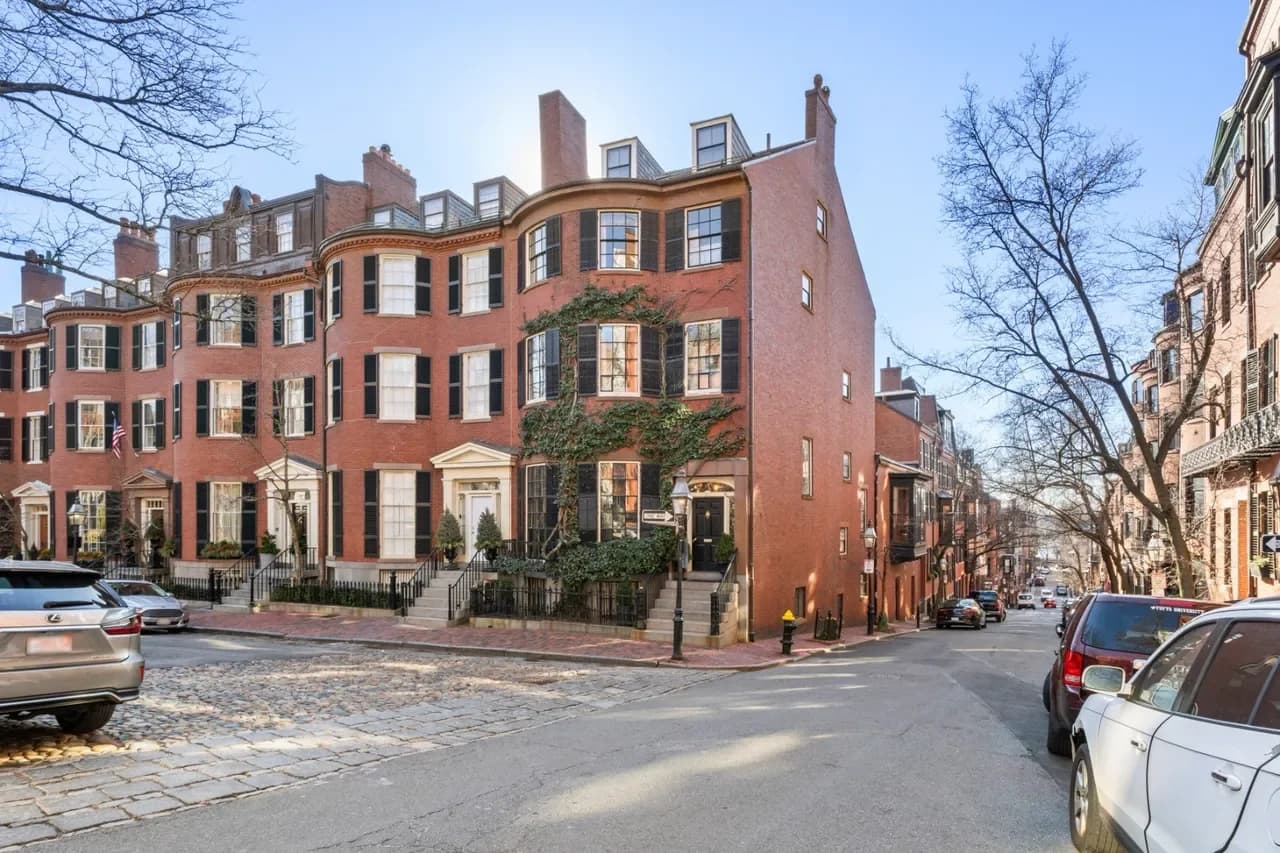
If your vision of Boston life involves walkable mornings, brownstone-lined blocks, restaurants around the corner, and a short stroll to the Public Garden or the Southwest Corridor, this is where your money goes.
In the Back Bay and South End condo markets, $1.5M typically buys 1,000–1,200 sq ft—usually a 2-bed/2-bath or a generous 1-bed with a dedicated office, depending on layout, finish level, and whether outdoor space is included. Most of these units sit inside historic brownstones built roughly 1880–1910, with interiors modernized through renovations completed within the last decade.
The core value proposition here is location density: the ability to live smaller but do more, without a car.
Boston condo median pricing by area (mid-2025 snapshot)
Side-by-side comparison of reported condo median prices/ranges across several Boston areas and the luxury segment (all values in USD).
| Series | Label | Value |
|---|---|---|
| Median sale price (USD) | Dorchester (02122/02124) | under $660,000 |
| Median sale price (USD) | Brighton & Allston | $599K–$620K |
| Median sale price (USD) | Charlestown | $937,500 |
| Median sale price (USD) | Luxury segment (Back Bay/Midtown/Seaport) | $1.4M–$2.1M |
What are the trade-offs you need to budget for?
The biggest financial surprise at this price point rarely comes from the purchase price itself—it comes from the monthly overhead.
•HOA fees: typically $600–$1,200/month
These can materially reshape your monthly payment and long-term affordability, even in a neighborhood you love.
•Parking: often rented, off-site, or a tight tandem arrangement
If you need a car for daily life—commuting, childcare, regular trips outside the city—parking stops being a line item and becomes a genuine lifestyle cost.
Where do you have the most leverage?
Buyer leverage is strongest in this condo segment right now. Active condo inventory is up roughly 57% year-over-year, and when median days on market moves from 39 to 47 days, that's not just a footnote—it's a signal that sellers are more open to:
•Closing cost concessions
•Repair credits
•Rate buydowns, where seller-funded contributions temporarily reduce your interest rate
If Back Bay or the South End is where you want to be, this is a more negotiable environment than most buyers expect—especially relative to the peak competition years.
How Do Outer Neighborhoods Compare for Space and Value?
If 1,100 square feet sounds tight—or you want a yard, real storage, and the ability to host without rearranging furniture—your $1.5M stretches considerably further just a few miles out.
In Charlestown, West Roxbury, and parts of Dorchester, this budget typically lands you in the 1,800–2,500+ sq ft range, with property types shifting toward:
•Single-family homes
•Multi-level townhomes
•Large renovated condos that live like single-family
The trade-off is straightforward: you're exchanging a prime zip code for daily comfort—bigger bedrooms, real closets, flexible living space, and easier logistics.
What does each neighborhood "feel like" at $1.5M?
•Charlestown: A city-adjacent townhouse vibe with historic character and quick downtown access. You may preserve much of an urban lifestyle while gaining meaningfully more square footage than the South End or Back Bay can offer.
•West Roxbury: Classic suburban single-family living, with many homes built between 1920 and 1950. You're buying for stability—driveways, basements, and a slower pace that rewards long-term residents.
•Dorchester: Renovated homes with larger footprints, often with yard access—particularly in 02122 and 02124. Renovation quality and micro-location matter significantly here, but the value-per-square-foot can be compelling at this budget.
Why can negotiation feel different here?
While condos are absorbing more inventory and sitting longer, the single-family and townhome market in many outer pockets remains tighter. Sale-to-list ratios in these areas tend to hover near 100%.
Hesitation can cost you. But when you find the right home, you're typically rewarded with:
•Guaranteed parking (driveway or garage)
•Minimal-to-no HOA fees
•Private outdoor space, or at least meaningful separation from neighbors
The $1.5M Showdown: Core Condo vs. Neighborhood Home
Data Table
| Feature | Option A: Core City Condo (Back Bay/South End) | Option B: Neighborhood Home (Charlestown/West Roxbury/Dorchester) |
|---|---|---|
| Square Footage | 1,000 – 1,200 sq ft | 1,800 – 2,500+ sq ft |
| Property Type | Historic Brownstone Condo | Single-Family or Large Townhouse |
| HOA Fees | $600 – $1,200/month | Minimal to None |
| Parking | Rented or Tight Tandem | Guaranteed/Private Driveway |
| Buyer Leverage | High (Rising Days on Market) | Moderate (Tighter Inventory) |
| Key Lifestyle Win | Maximum Walkability & Culture | Private Space & Long-Term Stability |
How Should Buyers Navigate the Spring 2026 Market?
Shopping at $1.5M this spring requires a reframe. Stop asking, "What can I get?" and start asking: "What do I want my day-to-day life to actually feel like?"
The market is currently offering careful buyers something genuinely rare: time and optionality. With the Federal Reserve holding rates steady at 3.50% to 3.75% in early 2026, you can plan with a level of confidence that simply wasn't available two years ago. As market analysts have noted, "This is the best moment for strategic buyers since 2020. But it's not a moment for casual buyers."
What should you do differently depending on what you're buying?
•Leaning toward Back Bay or South End condos? Use today's leverage to negotiate on terms—particularly seller-paid closing costs, repair credits, or a rate buydown. The right negotiation can reduce your cash-to-close or monthly payment without touching the purchase price.
•Leaning toward Charlestown, West Roxbury, or Dorchester single-family or townhome living? Be selective, but move decisively when a home checks your non-negotiables. In tighter pockets, assertiveness pays off more than patience.
Whichever direction you go, anchor your decision to what holds value beyond the listing photos: quality of life, school district tiers (if relevant), commute reality, and assessed value relative to market value—not the adrenaline of winning an offer.
Want the exact $1.5M options for your neighborhood?
Tell me two neighborhoods you're considering and whether you prefer condo vs. single-family, and I'll map out what $1.5M is realistically buying there right now—including typical HOA ranges, parking expectations, and where negotiation is actually working in March 2026.