I'm Andrew Goldberg, a Boston real estate advisor specializing in first-time buyers across Greater Boston. I guide you A to Z—from first search to closing day. Serving Boston, Brookline, Medford, Cambridge, Somerville and Newton, MA.
# Land Scarcity vs. HOA Gluts: Why Q1 Buyers Are Abandoning High-Density for Historic Cores
Key Takeaways
•The Core Divide: While South End and Back Bay are both premier Boston luxury real estate markets, buyers in 2026 view Back Bay brownstones as low-risk wealth preservation and South End condos as high-risk lifestyle assets.
•The Myth: High-density luxury condos offer a more predictable, maintenance-free lifestyle than historic 19th-century homes.
•The Reality: Escalating Homeowner Association (HOA) fees and the looming special assessments risk in newer buildings are creating budget shock, whereas land scarcity in historic cores protects long-term value.
•The Bottom Line: Buyers prioritizing financial stability should target self-managed or low-HOA historic properties, while those choosing high-density amenities must rigorously audit building reserve funds before purchasing.
Why Are March 2026 Buyers Treating Boston's Luxury Markets So Differently?
South End vs. Back Bay is no longer just a "vibe" decision.
As of March 12, 2026, buyers are underwriting these two neighborhoods like distinct risk profiles—even though both sit firmly in Boston's luxury tier. Nationally, the luxury entry point hovered around $1.2M in February. But Boston's shift runs deeper than headline numbers. Buyers are scrutinizing ongoing carrying costs and resale liquidity with a discipline that simply wasn't there two years ago.
Boston Housing: Key Numbers (2025–Early 2026)
A quick, mixed-units snapshot combining price, inventory, and financing context from citywide 2025 results and early-2026 condo and rate indicators.
The automatic bidding-war era has cooled citywide. List-to-sale ratios have slipped to 98.1%, and roughly 63.5% of transactions are closing under list price. In that environment, buying the "wrong" kind of luxury carries real consequences—you can no longer count on rapid appreciation to absorb high monthly costs or a building's shaky finances.
The question buyers are now asking is pointed: does this asset protect me through a softer cycle, or does it expose me to costs I can't control?
That tension—land scarcity versus HOA exposure—is what's driving the split.
"This isn't a crash. It's a recalibration."
How Does Land Scarcity Protect Back Bay Brownstones?
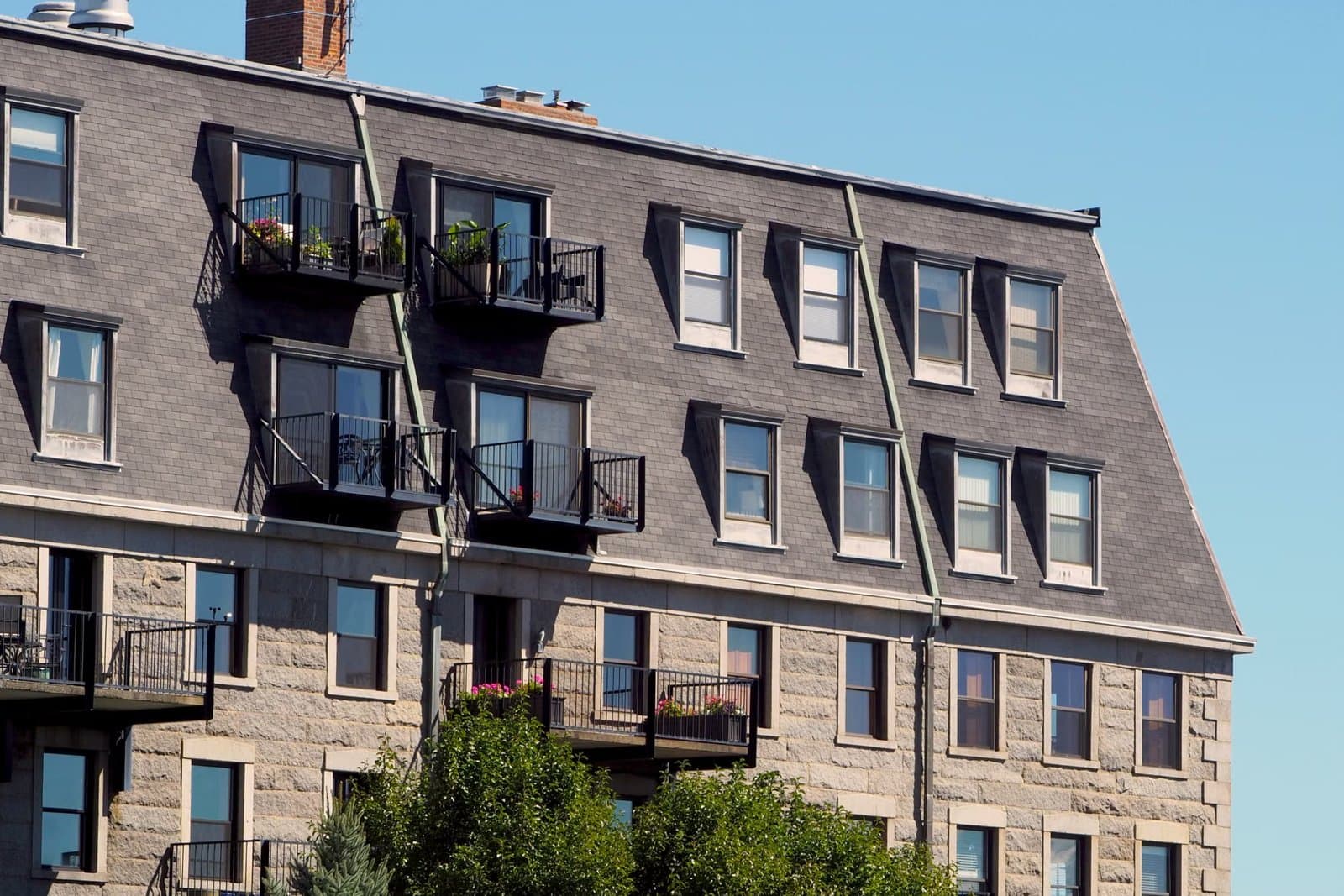
Back Bay brownstones carry a structural advantage that no developer can replicate: they cannot be built at scale. Boston stopped producing 19th-century townhouses in established historic cores a long time ago, and the market prices that reality accordingly.
The result is a scarcity premium—a built-in floor that provides meaningful downside protection when conditions soften.
Home Values & Sale Prices: Back Bay vs West End/Fenway (Q1 2026)
Three like-for-like dollar comparisons (values, median sale price, and $/sq ft) across two adjacent zip-code markets using the same unit ($).
Typical Home Value
Median Sale Price
Price Per Sq. Ft.
Three like-for-like dollar comparisons (values, median sale price, and $/sq ft) across two adjacent zip-code markets using the same unit ($).
For buyers running disciplined payment math, the appeal is straightforward. A single-family brownstone—or a small, self-managed building—typically carries minimal or no HOA fees, which keeps monthly obligations far more predictable than a full-amenity condo tower. Lower fixed costs expand your future buyer pool, and a broader buyer pool translates directly to stronger resale liquidity when market conditions aren't ideal.
Sample Back Bay New Listings: Price vs Square Feet (Last 30 Days)
A small illustrative scatter using individual listing-level points to show how pricing relates to size among recent Back Bay-area listings.
1 Dalton Street #Unit 3801 (02199)
220 Boylston Street #9017 (02116)
172 Beacon Street #4 (02116)
A small illustrative scatter using individual listing-level points to show how pricing relates to size among recent Back Bay-area listings.
Even in slower cycles, capped inventory sustains urgency. Back Bay's buyer profile also skews toward wealth preservation and long holds—not two-year trial runs before upgrading. That orientation reinforces price stability in ways that lifestyle-driven markets simply don't.
On the lifestyle side, Back Bay buyers tend to value things that don't carry a monthly line item: private outdoor space, classic façade character, deeded parking, and direct control over the property. Older homes do require maintenance—that's a real trade-off. But there's a meaningful distinction between capital expenditures you control (roof timing, boiler replacement, masonry work) and fees you don't (HOA increases, building labor contracts, deferred maintenance inherited through special assessments).
"Buyers are coming back with strategy. They're not waiving inspections blindly. They're being selective, but when they find the right home, they're moving decisively."
Data Table
Back Bay Brownstones
Market Impact
Pros
High land scarcity, minimal HOA fees, strong wealth preservation.
Are High HOA Fees Derailing South End Condo Investments?
The South End remains one of Boston's most desirable neighborhoods—that hasn't changed. What has changed is how buyers evaluate product type within it. Newer, higher-density luxury condo pockets carry a fundamentally different risk profile than a brownstone-style, low-unit association, and buyers are no longer glossing over that distinction.
South End Mobility Profile
A single-neighborhood livability-style profile showing how the South End scores across three transportation modes on a consistent 0–100 scale.
Walking Score98/100
Bike Score92/100
Transit Score92/100
A single-neighborhood livability-style profile showing how the South End scores across three transportation modes on a consistent 0–100 scale.
HOA fees are now receiving the same scrutiny as interest rates—and for good reason. They hit your monthly budget with the same force, and unlike a mortgage rate, you cannot refinance them away. In core city luxury condos, fees currently run roughly $600 to $1,200 per month. That carrying cost directly compresses what buyers will pay on a price-per-square-foot basis, which in turn affects your resale leverage—particularly when competing listings offer comparable finishes at comparable fees.
Condo Pricing: Charlestown vs Back Bay (2025)
Side-by-side 2025 condo pricing across two neighborhoods using multiple $ metrics (average, median, and average $/sq ft).
Average Price
Median Price
Avg PSF
Side-by-side 2025 condo pricing across two neighborhoods using multiple $ metrics (average, median, and average $/sq ft).
There are also visible signs of a luxury condo overhang in parts of the market—more high-end units than the buyer pool will absorb quickly when demand softens. In slower cycles, elevated days-on-market becomes a negotiating tool for buyers, not sellers.
Then there's the question driving the most hesitation: special assessments and reserve fund opacity.
"Will the HOA go up? Could there be a special assessment? Am I locking into flat appreciation while paying luxury-level carrying costs?"
That's the internal monologue of a 2026 buyer. If it sounds familiar, you're already thinking about this correctly.
Data Table
South End Condos
Market Impact
Pros
Turnkey lifestyle, modern amenities, high transit and walkability.
Cons
High recurring HOA fees, special assessments risk, lower resale liquidity.
Which Neighborhood Wins the Boston Luxury Real Estate Battle?
The cleanest framework for South End vs. Back Bay in 2026 comes down to what kind of asset you're actually buying:
•Back Bay behaves like downside protection—scarcity, capped inventory, and typically lower recurring monthly obligations.
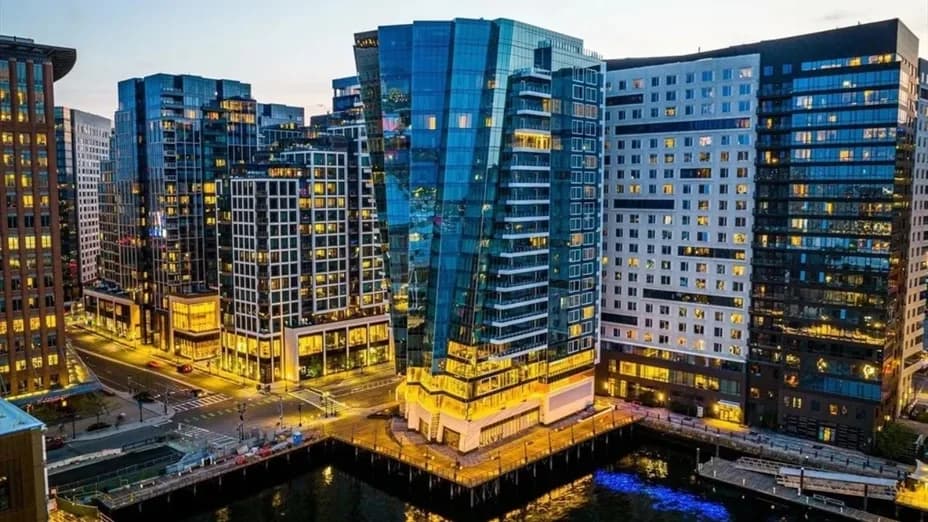
•South End condos behave more like a lifestyle asset with governance risk—strong amenities and walkability, offset by higher fixed carrying costs and meaningful dependence on building finances.
In the Boston condo market of 2026, aesthetics alone no longer justify a price. Governance is value. That means reserve fund strength, owner-occupancy ratios, delinquency rates, upcoming capital projects, and the transparency of board management all belong in your due diligence. Buy into a building with weak reserves and you risk paying twice—once in monthly HOA fees, and again through special assessments—while appreciation stays flat in a softer market.
Back Bay buyers have their own diligence checklist. Verifying assessed value versus market value is worth the effort; long-term property tax expectations can shift meaningfully if that gap is wide.
"Where a glut of new luxury condos gives buyers options and negotiating leverage, the constrained supply of historic cores preserves urgency and pricing—hence the market split."
Data Table
Metric
Option A: Back Bay Brownstones
Option B: South End Condos
Primary Asset Value
Land scarcity and historic architecture
High-density lifestyle amenities
Carrying Costs
Low to zero HOA fees
High recurring HOA fees ($600–$1,200/mo)
Risk Profile
Low (Wealth preservation)
Moderate to High (Special assessments risk)
Market Velocity
High urgency due to capped inventory
Slower absorption due to condo overhang
The Verdict
For buyers prioritizing risk-adjusted luxury—the kind that keeps you from feeling house-poor when the market gets choppy—Back Bay's historic, low-HOA inventory offers the cleaner profile right now.
For buyers who want turnkey convenience and amenities, the South End can still be an excellent purchase. But only if you approach the building like a balance sheet: reserves, upcoming capital projects, and fee trajectory deserve as much attention as the kitchen finishes.
Share your budget range, ideal monthly payment ceiling, and whether parking or outdoor space is a requirement—and the analysis can get specific: which South End micro-buildings and which Back Bay blocks align with your risk tolerance, along with the exact HOA documents worth reviewing before you commit.
Common Questions
What makes Back Bay brownstones feel “lower risk” than South End condos in 2026?
Back Bay brownstones behave like scarcity assets because supply is capped by historic housing stock and strict redevelopment limits. In Boston luxury real estate, that scarcity supports resale liquidity and pricing. By contrast, many South End condos carry ongoing HOA and assessment exposure that can change the effective monthly cost overnight.
How can I tell if a South End condo’s HOA fee is likely to jump after I buy?
HOA fee risk shows up in the budget, reserve schedule, and deferred maintenance list. Ask for the last 24 months of financials, the reserve study, and planned capital projects, then compare reserves to upcoming replacements (roof, elevators, HVAC). In Boston luxury real estate, weak reserves often precede higher fees or assessments.
What is a “special assessment,” and why does it matter more in luxury condo buildings?
A special assessment is a one-time charge owners must pay when reserves can’t cover a major repair or upgrade. It matters more in amenity-heavy South End condos because elevators, garages, and building systems are expensive and shared. In Boston luxury real estate, assessments can reduce affordability and slow resale demand.
How do HOA fees change my mortgage approval and real monthly budget?
HOA fees count as a fixed housing expense and can materially raise your debt-to-income ratio, even if the purchase price stays the same. A $900/month fee can reduce what you qualify for or force a higher down payment. In Boston luxury real estate, this “payment ceiling” often caps condo appreciation.
Can a self-managed brownstone building in Back Bay still have condo-style financial risks?
Self-managed buildings can still face risk if governance is informal, reserves are underfunded, or owners delay maintenance. Request meeting notes, a maintenance log, and proof of reserve balances—especially for masonry, roof, and shared mechanicals. In Boston luxury real estate, well-run small associations can be stable, but documentation matters.
Will a condo “glut” in the South End affect resale even if my unit is high-end?
A condo overhang can slow resale because buyers gain alternatives and negotiate harder, even for premium finishes. High HOA fees amplify the effect by widening the monthly cost gap versus competing inventory. In Boston luxury real estate, best-in-class units still sell, but pricing power usually weakens when supply expands.